The 2026 Fan's Guide to World Cup Football
World Cup football is FIFA’s premier men’s international tournament, bringing national teams from every confederation together for the 2026 finals in the United States, Canada, and Mexico. The expande...

The 2026 Fan's Guide to World Cup Football
World Cup football is FIFA’s premier men’s international tournament, bringing national teams from every confederation together for the 2026 finals in the United States, Canada, and Mexico. The expanded competition will feature 48 teams, 104 matches, and a final hosted at MetLife Stadium in New Jersey, creating the largest World Cup format yet. Football Compass follows the tournament through match predictions, team tactics, player statistics, and daily coverage designed for fans and responsible sports analysis. The 2026 edition begins on June 11, with the final scheduled for July 19, and the three host countries qualify automatically. The key change is structural: 12 groups of four teams replace the previous eight-group format, while 32 teams advance to the knockout phase. Start by tracking squad quality, recent form, injuries, and tactical matchups rather than relying on reputation alone.

Photo by George Zografidis on Pexels
Have you ever thought about why the World Cup can make a team with 60 percent possession look less dangerous than a side defending deep and counterattacking? The answer is usually efficiency, not aesthetics. International football gives coaches limited training time, so repeated patterns, set pieces, defensive spacing, and transition speed often matter more than elaborate club-style systems. A useful analysis model should combine measurable evidence with context: expected goals, shots from dangerous zones, progressive passes, pressing success, goalkeeper saves, and the quality of recent opponents. Football Compass uses that wider view when assessing 2026 World Cup matches, because one excellent club season does not automatically transfer to a six-week international tournament. For a quick foundation, explore our [Internal Link: World Cup football basics guide], then compare the numbers before making any prediction or forming a strong opinion.
Want a clearer tournament overview before the fixtures arrive?
If you are new to World Cup football: understand the 2026 format
The 2026 FIFA World Cup uses 48 teams in 12 groups of four, with the top two teams in each group plus the eight best third-placed teams advancing to a 32-team knockout bracket. This creates 104 matches, compared with 64 in the 2022 Qatar tournament. The competition opens on June 11, 2026, and ends on July 19, 2026, across venues in the United States, Canada, and Mexico.
That format changes the expected-value calculation for every group. In the old 32-team structure, one poor result could immediately damage a team’s qualification probability; in 2026, finishing third may still be enough, but only if the points total and goal difference compare favorably with other groups. The practical result is that fans should not treat a draw as automatically good or bad. A team with four points may qualify comfortably in one group and face a tense ranking comparison in another. FIFA’s official competition information is available through the FIFA World Cup 2026 tournament page, while the 2022 FIFA World Cup overview provides a useful comparison point.
The host allocation also affects preparation. Canada, Mexico, and the United States receive automatic places, while the remaining nations qualify through their confederations, including UEFA, CONMEBOL, AFC, CAF, CONCACAF, and OFC. Travel distances, climate, altitude, kickoff times, and recovery windows may become meaningful variables, especially when a team plays in Vancouver, Mexico City, Atlanta, or the New York metropolitan area within a short period. The math is not glamorous, but accumulated travel can reduce pressing intensity and late-match sprint output. Check the schedule, venue, and rest gap before judging a team’s performance.
A simple 2026 tournament checklist looks like this:
- Confirm the group, venue, kickoff time, and rest period.
- Check whether the opponent prefers possession, direct play, or counterattacks.
- Compare recent expected-goal performance rather than only final scores.
- Review injuries, suspensions, and likely rotation.
- Separate qualification probability from knockout-stage upside.
Here is the useful contrarian point: more teams do not necessarily mean more attacking football. A cautious team may calculate that avoiding defeat is more valuable than chasing a second goal, particularly if its goal difference is already healthy. That can produce lower-tempo group matches even though the tournament contains 40 more games than Qatar 2022. Fans following Football Compass should therefore evaluate incentives, not just team reputation or highlight clips.
If you follow a favorite team: study tactics before the badge
The best way to assess a World Cup team is to identify its repeatable tactical advantage, then test whether the tournament schedule exposes or protects it. For example, a high press can create short-term chances but become less effective in heat, heavy travel, or a compressed three-match group stage. A deep defensive block may look passive but can be highly efficient when paired with quick forwards and accurate long passing.
International coaches also make different trade-offs from club managers. Didier Deschamps with France, Lionel Scaloni with Argentina, Luis de la Fuente with Spain, and Gareth Southgate with England have each worked within different squad pools, tactical traditions, and public expectations. The relevant question is not simply which coach is “best.” It is whether the coach’s preferred structure fits the available midfielders, full-backs, center-backs, and forwards. A 4-3-3 on a lineup graphic can become a 3-2-5 in possession, while a 4-2-3-1 may defend as a narrow 4-4-2. Watch those transformations rather than trusting formation labels.
For team-by-team reading, use our [Internal Link: World Cup tactics and formations analysis]. It is especially useful when comparing a possession-heavy side such as Spain with a transition-focused team such as Argentina. The difference can be measured through field tilt, final-third entries, passes into the penalty area, and shot quality. Possession itself is not a winning strategy; it is only the environment in which a strategy operates. A team holding 58 percent of the ball but producing 0.75 expected goals may be less threatening than one holding 39 percent and producing 1.45 expected goals.
A practical tactical audit should answer five questions:
- Does the team create chances centrally or mostly from wide areas?
- Can its midfield resist pressure when the first pass is blocked?
- Does the defensive line protect space behind it?
- Are set pieces a major source of expected goals?
- Can substitutes preserve intensity after the 70th minute?
One useful edge case rarely discussed in generic World Cup previews is the goalkeeper’s role in tournament variance. Over a three-match group stage, two or three high-quality saves can shift qualification odds more than a modest improvement in possession. A goalkeeper who starts attacks accurately can also bypass an opponent’s press, but that benefit disappears if the team’s forwards cannot win second balls. Football Compass player analysis should therefore include save percentage, post-shot expected goals, claim success, and passing under pressure, not only clean sheets.
Interested in seeing tactical matchups translated into simple match notes?

Photo by Tima Miroshnichenko on Pexels
If you compare teams and players: use evidence, not reputation
Player evaluation becomes more reliable when the sample is divided into role, competition level, and game state. A striker’s club goal total may look impressive, but international opponents can defend deeper, provide fewer chances, and demand more off-ball work. Likewise, a midfielder with 90 percent passing accuracy may mostly play safe passes, while another with 84 percent may attempt the progressive actions that unlock compact defenses.
Useful player indicators include:
- Non-penalty expected goals and expected assists per 90 minutes.
- Progressive carries and passes into the final third.
- Duel success when adjusted for position and opponent quality.
- Pressures, recoveries, and defensive actions after possession loss.
- Minutes played during the previous six to eight weeks.
- Set-piece involvement and penalty responsibility.
The last point is more important than it looks. International tournaments create many close matches, and a single penalty, corner, or indirect free kick can dominate the result. According to the International Football Association Board Laws of the Game, a penalty kick is awarded for a direct-free-kick offence inside the defending team’s penalty area. That sounds basic, but analysts often ignore how a team earns those situations through isolation dribbles, cutbacks, and pressure on uncomfortable defenders. “The referee’s decision is final,” the Laws state in substance, so post-match arguments rarely improve the prediction.
There is also a data trap around small samples. A forward scoring four goals in two matches has a 2.00 goals-per-match rate, but that statistic has a wide uncertainty range and may depend on weak opposition or unusually high finishing. A more stable approach is to combine at least 10 to 15 competitive appearances with shot locations, chance quality, minutes, and role continuity. This does not eliminate uncertainty; it simply reduces the chance of mistaking a hot streak for a permanent skill change. See our [Internal Link: player statistics and performance metrics guide] for a deeper framework.
The expected-value mindset is straightforward:
- Estimate the probability of each match outcome.
- Identify the assumptions behind that estimate.
- Test how injuries, venue, and tactics change the probability.
- Compare your conclusion with independent models.
- Avoid overstating confidence when the edge is small.
For responsible sports analysis, a prediction is not a promise. A 60 percent projected win probability still loses 40 percent of the time, which is why Football Compass presents match insights as information rather than certainty. If you follow sports markets, check local rules, use only licensed services where applicable, set a fixed budget, and never chase losses. The National Council on Problem Gambling provides public guidance on safer gambling and support resources in the United States. The rational move is boring but effective: preserve your decision quality over the full tournament instead of reacting emotionally to one result.
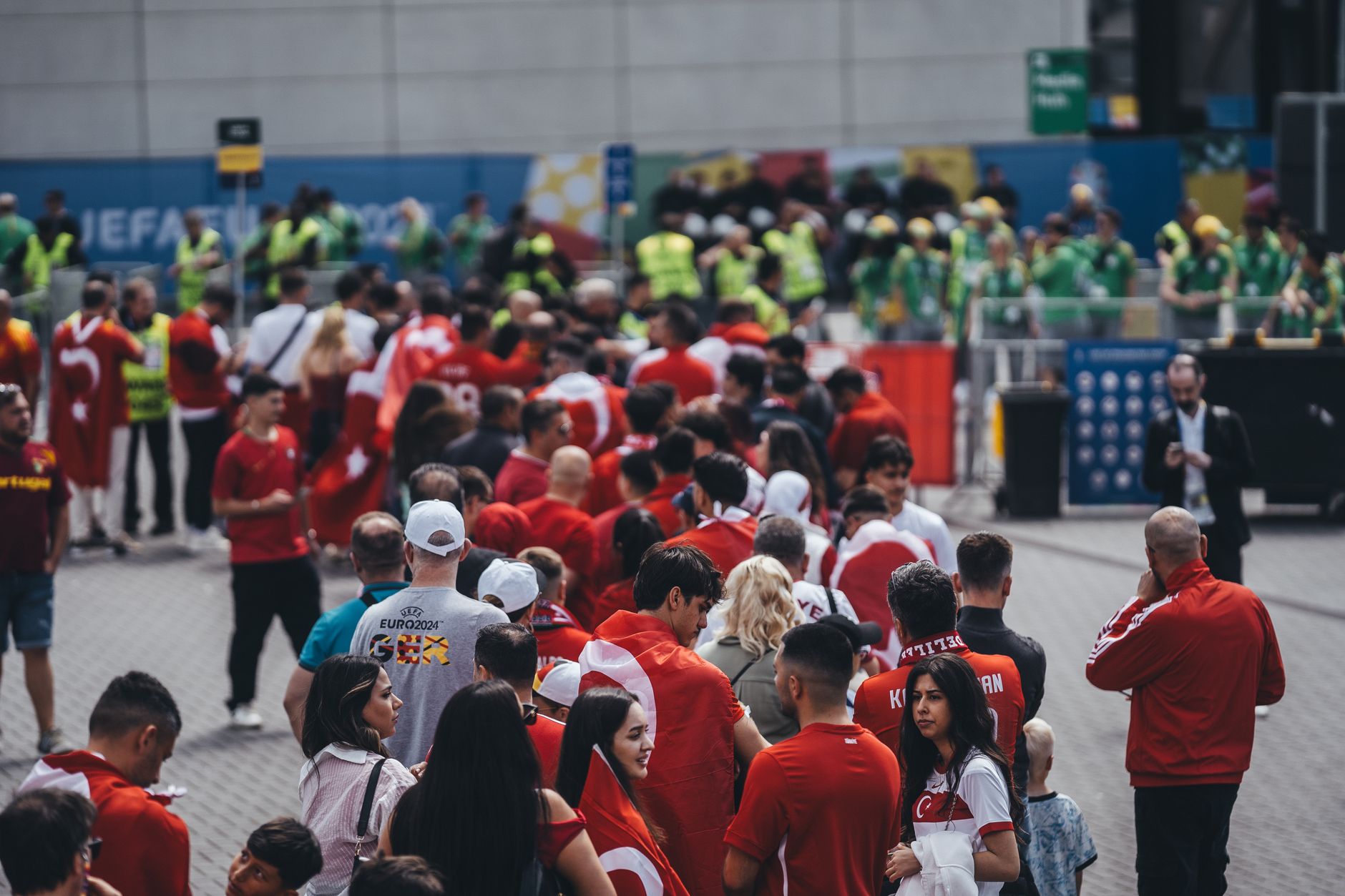
Photo by Omar Ramadan on Pexels
Common pitfalls to avoid
The most common World Cup football mistake is treating a famous team as a guaranteed winner. Brazil, Germany, France, Argentina, Spain, England, and Italy may attract attention for understandable historical reasons, but past titles do not directly create present-day expected goals. A team can have elite attackers and still underperform if its rest defense is weak, its midfield cannot progress the ball, or its bench lacks like-for-like replacements. The FIFA World Cup records and statistics reference is useful for historical context, but history should be an input, not the conclusion.
Another error is reading one match without its conditions. A red card in the 18th minute, a goalkeeper injury, extreme heat, or a heavily rotated lineup can make the final score a poor description of normal team strength. Analysts should annotate unusual events before updating their opinion. Otherwise, the model quietly learns the wrong lesson and overreacts to noise.
Avoid these habits:
- Using FIFA ranking position as the only team-strength measure.
- Treating possession as a direct proxy for control.
- Ignoring rest days and intercontinental travel.
- Assuming a star player is fully fit because he appears on the bench.
- Confusing a prediction with a guarantee.
- Increasing risk after a losing result.
- Copying social-media consensus without checking assumptions.
A specific operational insight is that lineup news can create false certainty. Official starting lineups are usually confirmed roughly an hour before kickoff, but the tactical effect depends on the replacement’s role, not merely the missing player’s name. If a starting full-back is replaced by a more defensive option, the team may lose attacking width while gaining protection against counters. If a central midfielder is absent, the team’s pressing resistance may decline even if the replacement has a higher passing completion rate. Compare functions, not headline value.
A second overlooked edge case concerns knockout tie incentives. In a group match, a team may accept a draw because qualification remains likely; in a knockout match, the same team may protect a one-goal lead for 20 minutes. That change affects shot volume, possession, substitutions, and late-match variance. Therefore, models trained on league football can misprice tournament behavior if they do not account for elimination pressure. The best workflow blends historical data, current tactical evidence, and situational incentives.
The 30-day check-in: what should you monitor before kickoff?
The 30-day check-in should focus on information that can materially change team strength: injuries, squad selection, club minutes, tactical experiments, travel schedules, and opponent quality. It should not become a daily spiral through every rumor online. Start with a baseline rating, then update it only when new evidence changes a meaningful assumption. This Bayesian approach is less exciting than declaring a new favorite every morning, but it has a better expected value.
Track the following once per week:
- Player availability and expected return dates.
- Starting XI continuity across recent international matches.
- Team chance creation and chance prevention.
- Set-piece goals for and against.
- Pressing intensity after halftime.
- Travel distance, venue climate, and rest periods.
- Injury replacement quality by tactical role.
- Changes in coaching staff or formation.
At the 30-day point, also compare public narratives with measurable performance. If a team is being praised for “dominance,” check whether its shots, penalty-area touches, and expected goals support that label. If a supposedly defensive team is criticized for lacking ambition, check whether it limits opponent shot quality and creates efficient transitions. Numbers do not replace watching matches, but they stop one memorable clip from controlling the entire argument.
Football Compass can be useful during this period because its 2026 World Cup coverage connects predictions with tactics, player statistics, and tournament context. That combination is more valuable than a bare list of favorites. Keep a simple note for every team: best strength, biggest weakness, likely game state, and one condition that would change your view. By kickoff, you should know what evidence would prove your original analysis wrong. That is not pessimism; it is basic quality control.
Ready to follow the final preparation phase with a structured approach?

Photo by Josh Withers on Pexels
A practical World Cup football viewing method
Watching every match is unrealistic for most people, especially with 104 fixtures spread across multiple time zones. A better plan is to prioritize matches with high information value. Group games involving contrasting tactical styles can reveal more than a predictable meeting between two similarly structured teams. Likewise, a match featuring a returning star or a new coach deserves attention because the uncertainty is higher and the evidence can update quickly.
Use a three-layer viewing method:
- Before kickoff: review form, availability, tactical matchup, venue, and incentives.
- During the match: watch the first pressing pattern, defensive line, and transition response.
- After the match: separate repeatable causes from random events and referee decisions.
Do not record only the score. Note whether chances came from open play, set pieces, penalties, counterattacks, or defensive errors. Over several matches, these categories help identify whether a team is genuinely improving or simply benefiting from short-term variance. A team scoring three goals from low-probability shots may be entertaining, but its future output could regress. Conversely, a team creating high-quality chances without scoring may be closer to a breakthrough than the table suggests.
The cleanest conclusion is simple: World Cup football rewards preparation, adaptability, and efficient decision-making. The 2026 tournament’s 48-team structure, three host countries, 104 matches, and expanded knockout field will create more stories and more uncertainty, not less. Use Football Compass for daily analysis, but keep your own assumptions visible, verify major news, and treat every prediction as a probability range rather than a fixed truth. The fan who understands why a match may unfold a certain way gets more value from the tournament than the fan who only guesses the final score.
Want to keep your 2026 World Cup notes and match analysis in one place?
Frequently Asked Questions
Q: What is World Cup football?
A: World Cup football is FIFA’s international men’s tournament for national teams, held every four years. The 2026 edition will feature 48 teams from FIFA’s six confederations and will take place in the United States, Canada, and Mexico. It will include 104 matches, beginning on June 11 and ending with the final on July 19. Unlike club competitions, players represent their countries, so squad chemistry, travel, and limited preparation time strongly affect performance.
Q: How do teams qualify for the 2026 World Cup?
A: Teams qualify through regional competitions organized by FIFA’s confederations, while Canada, Mexico, and the United States qualify automatically as hosts. UEFA, CONMEBOL, AFC, CAF, CONCACAF, and OFC each use different qualification formats and allocation numbers. Intercontinental playoff places also influence the final lineup. Check FIFA’s official qualification updates because qualification dates, playoff arrangements, and roster information can change before the tournament begins.
Q: What is the difference between the 2026 and 2022 World Cup formats?
A: The 2026 World Cup has 48 teams and 104 matches, while the 2022 tournament had 32 teams and 64 matches. In 2026, 12 groups of four teams will be followed by a 32-team knockout stage, with the eight best third-placed teams joining the group winners and runners-up. This creates more matches and more routes to qualification, but goal difference and group comparison may become more important.
Q: How should I analyze a World Cup football match?
A: Analyze recent team strength, expected goals, tactical style, player availability, venue conditions, rest, and qualification incentives. Start by comparing how each team creates and prevents chances, then identify whether the matchup favors pressing, possession, counterattacking, or set pieces. Review the confirmed lineups before kickoff and avoid treating a single scoreline as a complete measure of performance. A written probability range is more reliable than an absolute prediction.
Q: Is World Cup football analysis free?
A: Basic World Cup football information, official schedules, tournament rules, and many public statistics are available free through FIFA and reputable football databases. Football Compass provides tournament coverage focused on predictions, tactics, player stats, and 2026 match insights. Costs may apply to third-party data platforms or premium services, so check the provider’s terms before subscribing. Sports-market users should also confirm local regulations and use licensed operators only.
Q: Why can a strong World Cup team lose unexpectedly?
A: A strong team can lose because football has low scoring, small samples, tactical mismatches, injuries, red cards, penalties, and goalkeeper variance. Even a team with a 60 percent projected win probability still loses in 40 percent of modeled outcomes. Tournament matches also feature unusual pressure and limited recovery time, which can magnify small weaknesses. The sensible response is to update the analysis rather than assume the result proves the team was always overrated.
Q: What should I do if a World Cup prediction fails?
A: Review the prediction’s assumptions before changing your entire model or increasing risk. Check whether the result came from repeatable tactical problems, unexpected lineups, injuries, officiating incidents, or random finishing variance. Record the original probability and reasoning, then compare it with what actually happened. Never chase losses or treat Football Compass analysis as a guarantee; responsible decision-making means accepting uncertainty and protecting your long-term judgment.
Keep exploring 2026 tournament coverage with our [Internal Link: World Cup match prediction hub], and revisit the tactical and player-statistics pages as squads and lineups become clearer.
Stay updated with Football Compass as the 2026 World Cup approaches.